

The Business Owner’s Guide to Better Brochures
Mark Hale ‐ October 7, 2026
A good brochure can do a lot more than simply tell people what your business does.
It can introduce your company to a new prospect, explain your services, answer common questions, support your sales team, and give potential customers something tangible to look at after a meeting.
And unlike a postcard, a brochure gives you enough room to tell a story without trying to cram everything into a few inches of space.
The problem is that a lot of business owners know they probably need a brochure, but they aren’t quite sure where to begin.
- What should you put in it?
- How much should you say?
- What kind of pictures should you use?
- Should you design it yourself?
- And how do you keep it from looking like every other brochure sitting in someone’s desk drawer?
- Let’s walk through it.



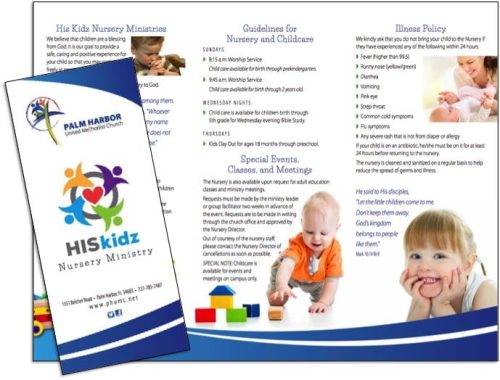
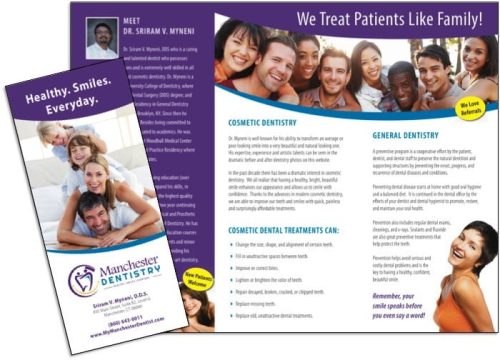
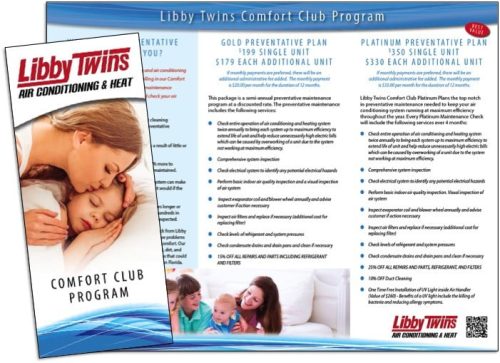
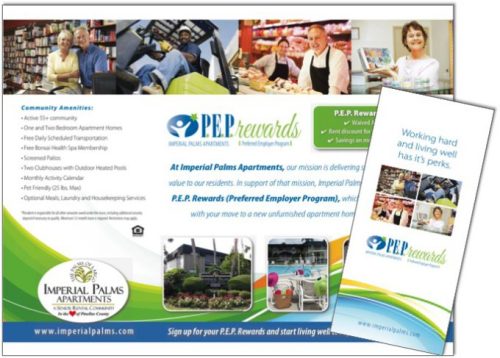
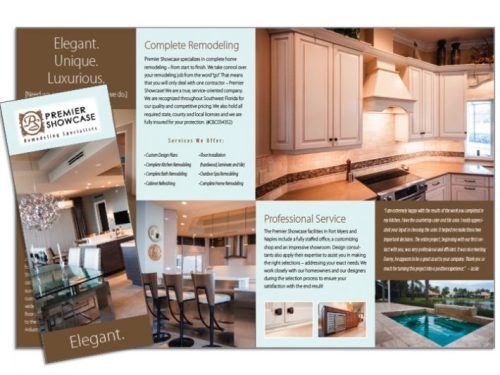
First, Decide What Your Brochure Is Supposed to Do
Before you start choosing colors, photos, fonts, or paper, answer one simple question: What do you want someone to do after reading your brochure?
That answer should guide almost every decision you make.
Maybe you want your brochure to:
- Introduce prospects to your company and services.
- Explain something your customers frequently misunderstand.
- Help your salespeople explain your products.
- Promote a particular service or special offer.
- Position your company differently from your competitors.
- Give prospects more confidence before they make a purchase.
- Encourage people to call, visit your website, or request an estimate.
Trying to accomplish all of those things in one brochure usually creates a cluttered brochure that doesn’t accomplish any of them particularly well. There really isn’t such a thing as a brochure for “everybody.” The more specific you can be about the audience and purpose, the easier the brochure will be to write and design.
Think About Who Will Actually Read It
Your brochure shouldn’t be written for your business. It should be written for your customer. That’s an important distinction.
Business owners naturally want to talk about their equipment, capabilities, experience, and company history. Some of that information can certainly be useful, but your prospect is usually thinking about something much simpler: “What’s in this for me?”
Think about the person who will receive the brochure:
- What problem are they trying to solve?
- What questions do they normally ask?
- What makes them hesitant to buy?
- What matters most when they’re choosing a company like yours?
Answer those questions in your brochure, and you’ll immediately make it more useful.
You may also discover that you need more than one brochure.
For example, if you serve homeowners and commercial contractors, those two customers may care about completely different things. Trying to speak to both audiences in the same piece can water down your message.
Two focused brochures can often work much better than one generic one.
Don’t Try to Write a Novel
One of the biggest brochure mistakes is trying to fill every available inch of space. You don’t have to. White space is your friend.
People usually scan marketing materials before they decide whether they’re worth reading. Give them clear headlines, short paragraphs, bullet points and easy-to-find information.
Instead of writing: “Our company offers a comprehensive selection of services designed to meet the diverse and ever-changing needs of our customers…”
Say something useful. For example: Need it printed quickly? Most brochure projects can be produced in just a few business days once the artwork is approved.
Specific information is almost always stronger than generic marketing language.
Use Pictures That Actually Help Tell the Story
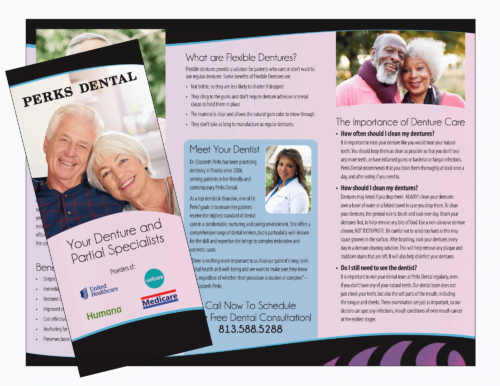
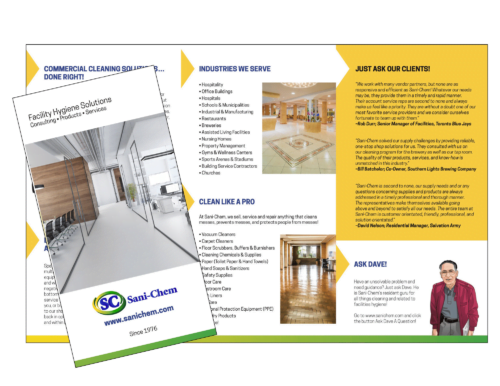
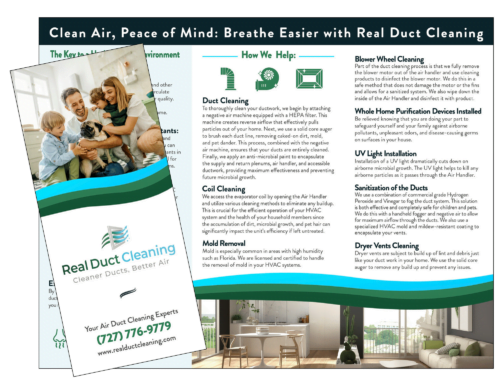
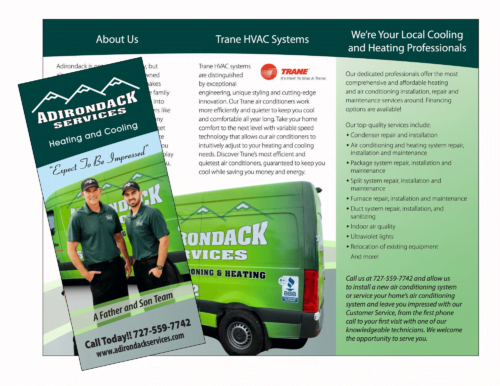
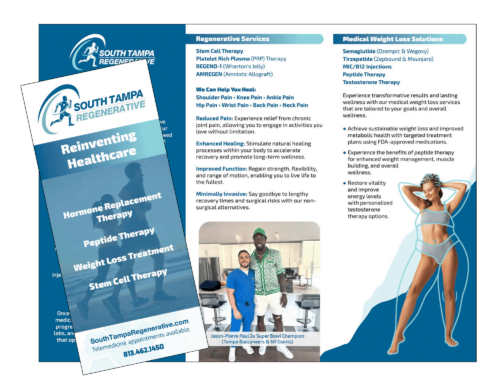
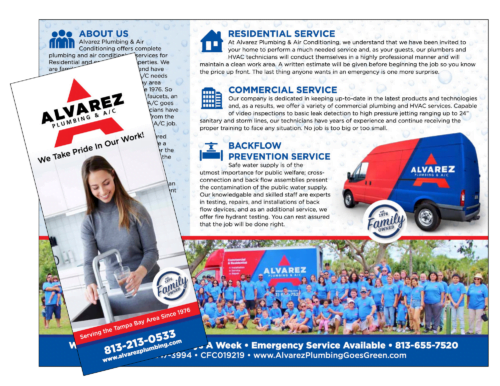
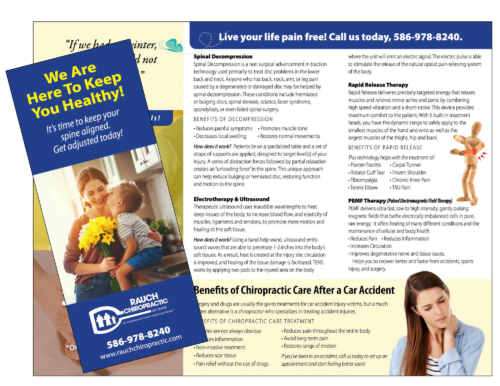
Images are one of the fastest ways to make a brochure feel either professional or homemade.
Stock photography can certainly be useful. But if you’ve ever looked through stock-photo websites, you’ve probably noticed the same overly enthusiastic business people shaking hands, pointing at computer screens, and smiling around conference tables.
Your customers have seen those pictures too.
Whenever possible, use photographs that are genuinely connected to your business.
That might include:
- Your products.
- Your team.
- Your facility.
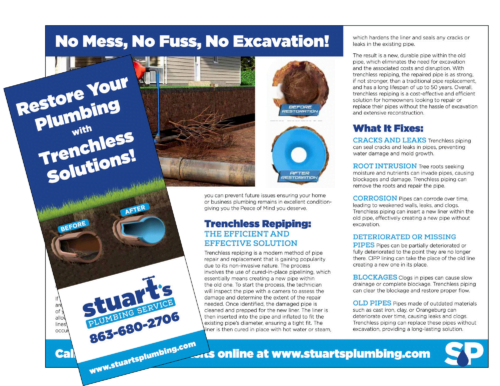
- Before-and-after examples.
- Completed projects.
- Customers using your product.
- Your equipment or production process.
Original photography immediately makes your brochure feel more authentic.
If you do use stock photography or illustrations, try not to simply drop an image into the brochure exactly as you found it.
A designer may be able to crop it differently, combine it with other graphic elements, adjust the colors, or use only part of the image to make the finished piece feel much more original.
Simple graphic elements can work well too. Icons, shapes, diagrams and illustrations can often explain something better than another generic photograph.
One word of caution: make sure you have the proper rights to use any photograph or artwork you put into your marketing materials. Finding a picture online doesn’t automatically mean you have permission to print it.
Keep Your Company’s Look Consistent
Your brochure doesn’t exist by itself. It’s part of everything your customer sees from your business.
Your website, business cards, postcards, folders, signs, invoices, proposals, and brochures are all quietly telling customers something about your company.
Ideally, they should look like they came from the same business.
That doesn’t mean every piece has to look identical. It simply means there should be some consistency in your:
- Logo.
- Colors.
- Typefaces.
- Photography.
- Graphic style.
- Tone of voice.
When those elements are consistent, your company begins to look more established and recognizable. When every marketing piece looks completely different, the business can feel disorganized even when it isn’t.
Be Careful With Do-It-Yourself Design
There are plenty of design programs available today, and they can be useful tools. But owning design software doesn’t necessarily make designing a brochure easy.
The same way buying a toolbox doesn’t make someone a carpenter, having access to a brochure template doesn’t automatically produce professional marketing.
One of the hidden costs of do-it-yourself design is time.
A business owner may spend hours adjusting fonts, moving photographs, fighting with margins, and trying to figure out why something doesn’t print correctly.
That time has value.
Sometimes doing it yourself makes perfect sense. Other times, paying a designer to handle the project is actually the less expensive option once you consider your time and the quality of the finished piece.
A professional designer can also catch problems you may never think about, including image resolution, bleeds, folds, margins, color settings and how the brochure will actually look once it’s printed and folded.
Plan the Brochure Before You Start Designing It
A brochure generally goes through four basic stages: Plan. Write. Design. Print.
Skipping the first two stages is usually where problems begin.
Before anyone opens a design program, gather everything you think you might need. That could include:
- Your logo.
- Contact information.
- Website address.
- Product or service descriptions.
- Customer testimonials.
- Photographs.
- Pricing or offers, if appropriate.
- Frequently asked questions.
- Your call to action.
Then decide what information is truly important. You may find that half of what you originally planned to include doesn’t need to be there. That’s a good thing.
Give Yourself Enough Time
Brochures almost always take longer than people expect. There may be writing, photography, proofreading, design revisions, printing, and sometimes mailing involved.
If you’re creating a brochure for a trade show, event, product launch, or mailing campaign, don’t start the week before you need it.
Working ahead gives you time to make thoughtful decisions instead of settling for whatever can be finished fastest. It also gives you time to proofread. Then proofread again.
Phone numbers, website addresses, prices, and dates are especially worth checking carefully. Printing thousands of brochures is a painful way to discover that one digit in your phone number is wrong.
Look at Other Brochures Before Creating Yours
Here’s an easy research project that costs absolutely nothing.
Start collecting brochures. Pick them up when you’re at hotels, doctor’s offices, trade shows, retail stores, and other businesses.
- Don’t limit yourself to your own industry.
- Look at what catches your attention.
- Which covers make you want to open the brochure?
- Which headlines are easy to understand?
- Which brochures feel crowded?
- Which ones make it easy to find contact information?
- Which photographs feel genuine?
You’ll start noticing patterns surprisingly quickly. Keep the ideas you like and learn from the mistakes you don’t.
Remember That Printing Is Part of the Design
The paper, size, folds, and printing method can change the way your brochure feels just as much as the graphic design.
A brochure might be printed in one or two colors, or in full color. Digital printing has also made shorter quantities of full-color brochures practical for many businesses.
Your brochure can be folded in several different ways depending on how the information needs to be organized. It can even be designed as a self-mailer for a direct-mail campaign.
Talk to your printer early in the process rather than waiting until the design is finished.
A good printer may be able to suggest a size, paper, or format that improves the brochure while keeping production costs under control.
Sometimes a small change to the design can make a significant difference in printing or mailing costs.
Don’t Forget the Most Important Part: The Next Step
After someone reads your brochure, what should they do? Tell them. Don’t make the customer figure it out. Your call to action might be:
- Call today for an estimate.
- Visit our website to see additional samples.
- Schedule a consultation.
- Bring this brochure in for a special offer.
- Ask your salesperson for a demonstration.
Give people a clear next step. A beautiful brochure that doesn’t encourage action is really just decoration.
Your Brochure Should Make Selling Easier
That’s ultimately the purpose of the piece. A good brochure doesn’t have to win design awards. It needs to help customers understand what you offer and why they should consider doing business with you.
Keep the message focused. Write for your customer. Use professional-looking images. Make the information easy to scan. Keep your branding consistent. And don’t be afraid to ask a professional for help when you need it.
Your brochure represents your company long after you hand it to someone. Make sure it’s saying the right things.
If you’re thinking about creating a new brochure, or updating one that has been sitting around for a few years, Wilson Print Marketing USA can help with the entire process, from design and layout to printing and finishing.
Have questions about brochure design or printing? Give us a call at 727-536-4173 and let’s talk about what you’re trying to accomplish.





High Quality
Printing And Design
Our Services
- Postcard Printing
- Business Brochures
- Booklet Printing
- Flyers
- Signs and Banners
- Customer Thank You Cards
- Websites
- Custom Pocket Folders
Join 1,000s of
happy customers